Sign up for the Slatest to get the most insightful analysis, criticism, and advice out there, delivered to your inbox daily.
The 2028 presidential election is still more than two and a half years away, but we’re already well into what pundits like to call the invisible primary. While nobody is technically running yet, several ambitious Democrats are busy jockeying for attention and floating policies they might try to pass if they win. In the run-up to the 2020 election, those plans focused largely on health care. So far, the watchword of the invisible primary this time around seems to be affordability, a catchall term for Americans’ sense that life—everything from housing and child care to groceries and gas—has gotten too expensive.
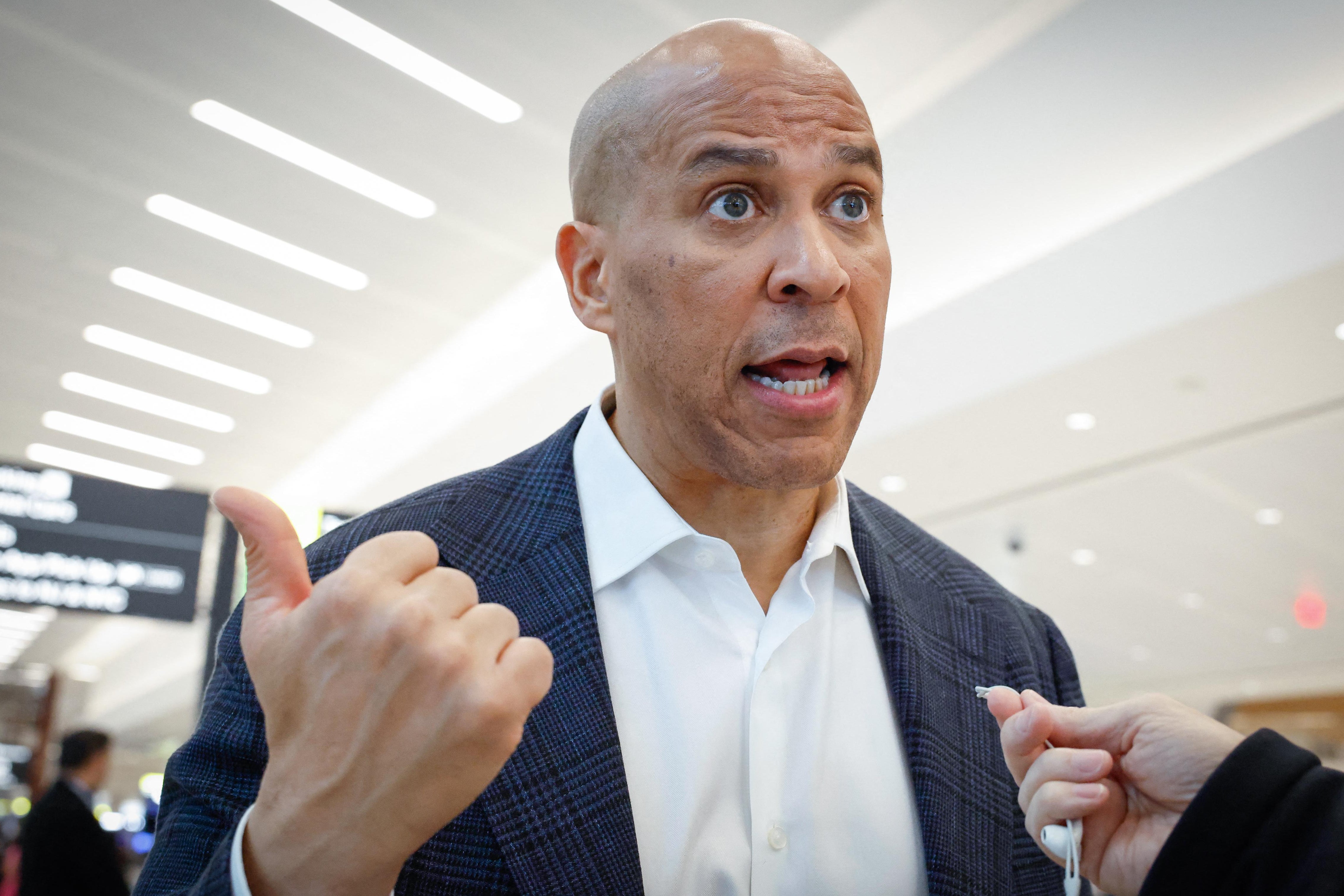
Two Democrats who have been talked about as possible presidential contenders, Sen. Cory Booker of New Jersey and Sen. Chris Van Hollen of Maryland, have released competing proposals that would cut taxes for most Americans by raising them on the ultra-wealthy. The plans differ in their specifics, but both are explicitly rooted in voters’ concerns about making ends meet. Booker’s, called the Keep Your Pay Act, would exempt taxpayers’ first $37,500 in income ($75,000 for married couples filing jointly) from federal taxes. In a press release unveiling the bill, Booker called it a response to “out of control costs” that “would immediately put more money in your pocket every month to deal with the high price of everyday expenses.” Van Hollen’s plan, a bill that several of his Democratic colleagues have co-sponsored called the Working Americans’ Tax Cut Act, would zero out federal income taxes for joint-filing households that make up to $92,000. It would also reduce other Americans’ tax burden via a so-called cost-of-living exemption funded by a surtax on millionaires.
Politically, this focus on affordability makes sense. Donald Trump retook the White House in large part because voters were unhappy about post-COVID inflation, spiraling gas prices after Russia invaded Ukraine, and high mortgage rates under Joe Biden. But Americans now give Trump similarly low marks on inflation and the economy. Democrats as varied as Zohran Mamdani and Abigail Spanberger successfully campaigned on cost-of-living concerns last fall, and it’s reasonable to think that a savvy pol could ride them all the way to the White House. Republicans have long campaigned against taxes, but an affordability-themed heel turn against them appears to be gaining currency among Democrats. Katie Porter, a former U.S. representative now running for governor of California, has proposed eliminating state income taxes for households that make less than $100,000 a year, aiming to put “thousands of dollars back in your pocket where it belongs.” Former Atlanta Mayor Keisha Lance Bottoms, who’s running for Georgia governor, supports exempting public school teachers from state income taxes.
But as actual solutions to the forces pinching Americans’ pocketbooks, both the Booker and Van Hollen tax plans largely misread the problem. The evidence we have suggests that if Democrats really want to allay the country’s anxieties about the cost of living, tinkering with the tax code probably isn’t the way to do it. A look under the hood of what’s fueling those worries helps tell the story—and suggests that these proposals are neither great policy nor stellar politics.
For one thing, there’s little proof that what Americans owe in federal income taxes is a major driver of their concerns about affordability. In January, when a New York Times/Siena poll asked voters which expenses they most worry about being able to afford, just 2 percent said taxes. The most common answers were housing (selected by 25 percent of respondents), medical bills and health care (16 percent), and food and other basic needs or bills associated with the cost of living (both of which came in at 8 percent). Pluralities of voters said they either couldn’t afford or felt financially insecure about the cost of health care, retirement, and having a family; most said education and housing have become unattainably expensive. As the Times’ polling guru Nate Cohn put it, the survey revealed deep angst about being able to meet “the rising price of entry for a middle-class life.”
As those numbers suggest, Democrats looking to sprinkle money taxed from the rich onto less-fortunate Americans and make it count would probably be better off looking elsewhere: say, at restoring subsidies for health insurance purchased via the Affordable Care Act, reversing the Trump administration’s cuts to Medicaid, or instituting funding incentives for states trying to build more housing. In fairness, a few in Washington are trying to do some of that already: This month, the Senate overwhelmingly approved a bipartisan bill, backed by Elizabeth Warren, the Massachusetts progressive, and Republican Tim Scott of South Carolina, that would incentivize new home construction and help convert vacant buildings into housing. But its prospects in the House, which passed a rival measure earlier this year, are uncertain.
Yet even if Trump signed that bill tomorrow, expanding the supply of housing isn’t an overnight fix, and the Booker and Van Hollen tax cuts aim to offer a stopgap to struggling families’ bottom lines. According to an analysis by the Yale Budget Lab, Booker’s plan would save households in the lowest 20 percent of the income distribution more than $800 annually. Combined with two other bills Van Hollen supports, his tax plan would save that same bottom fifth nearly $1,400, the Institute on Taxation and Economic Policy estimates. But many Americans already make too little to owe much—if anything—in income taxes, which means both plans’ savings are disproportionately weighted toward the middle- and upper-middle classes.
Recent history also suggests that even those who do benefit from tax cuts often don’t feel the impact. Here, the experience of Republicans, who have passed two major tax bills under Trump, is instructive. Trump’s 2017 tax law overwhelmingly benefited corporations and the superrich, but it did save many less wealthy families some money. Last summer, Trump signed another bill extending most of his earlier tax cuts and adding a few extra provisions that polled well with voters, including reducing what some tipped workers and older adults owe. Yet overall, both of Trump’s tax bills rank among the least popular pieces of legislation in decades, suggesting that their more popular components made little impression.
The previous Democratic administration offers another cautionary tale about using tax credits to paper over broader affordability concerns. During Biden’s presidency, Democrats temporarily beefed up the child tax credit, which gives parents money to spend on child care, food, and other family expenses. Biden’s expanded credit nearly halved child poverty, but voters gave it mixed reviews; it was popular, but not hugely. Faced with high inflation, many recipients didn’t feel the extra money went very far. Biden and his party also passed measures reducing what many Americans paid for prescription drugs, health insurance, and cars and appliances that run on electricity. They even sent voters pandemic relief checks of up to $1,400, no strings attached. None of it did much to counteract the sense that life had become too expensive.
So what can Democrats who aspire to the White House do to court affordability-minded voters? In the short term, bashing Trump and the GOP for higher prices is probably their best bet. The president and his party did that to Democrats to great effect in 2024; now the shoe is on the other foot and seems likely to stay there through this year’s midterms and probably into 2028. In the long term, policies that make it easier to check the boxes of a middle-class existence, from buying a house to sending a kid to college, beat tweaking the tax code.
But the frustrating truth is that there may not be an easy fix. Trump is now the second president in a row to find himself mired in the cost-of-living quicksand. His import duties and decision to launch a war in the Middle East haven’t helped. But Trump’s real problem, like Biden’s before him, seems to be that voters are mad that the prices of many goods and services are higher than they were before the pandemic and are likely to remain so. We might be stuck with the politics of affordability until voters forget what groceries cost back in 2019. And if Booker or Van Hollen really wants to avoid helming the third successive administration to fall victim to it, well, not running for president is always an option.