I imagine that it is frustrating, for some, to begin a show about a superhero, then discover, right in the first episode, that the series is about the protagonist quitting the superhero business. Yet that is what Daredevil: Born Again did almost immediately when it debuted on Disney+ last week, in a premiere that kills fan-favorite character and protagonist Matt Murdock’s (Charlie Cox) career as the vigilante Daredevil. The show’s focus then shifts, jumping forward a year to focus on a Murdock who has resolved to never put on the costume again, committing fully to his law practice.
There’s a resemblance to the Surf Dracula problem here. Born Again, however, makes a pretty great case (ha ha) for this decision—and for its sheer existence as a revival and continuation of the Netflix series—by its second episode, “Optics.” After a double-episode premiere that functions mostly as a coda to 2015’s Daredevil (and is likely inscrutable to anyone who never watched that series), “Optics” goes about laying the groundwork for Born Again’s parallel through lines: Matt Murdock’s attempts to be a lawyer and leave his alter ego behind, and the goings-on of his nemesis, the crime lord Wilson Fisk (Vincent D’Onofrio), as he settles into the New York City mayor’s office.
And then there’s the story of Hector Ayala—one of the most moving and devastating plots to unfold in a Marvel project, and reason alone to make watching Daredevil: Born Again worthwhile.
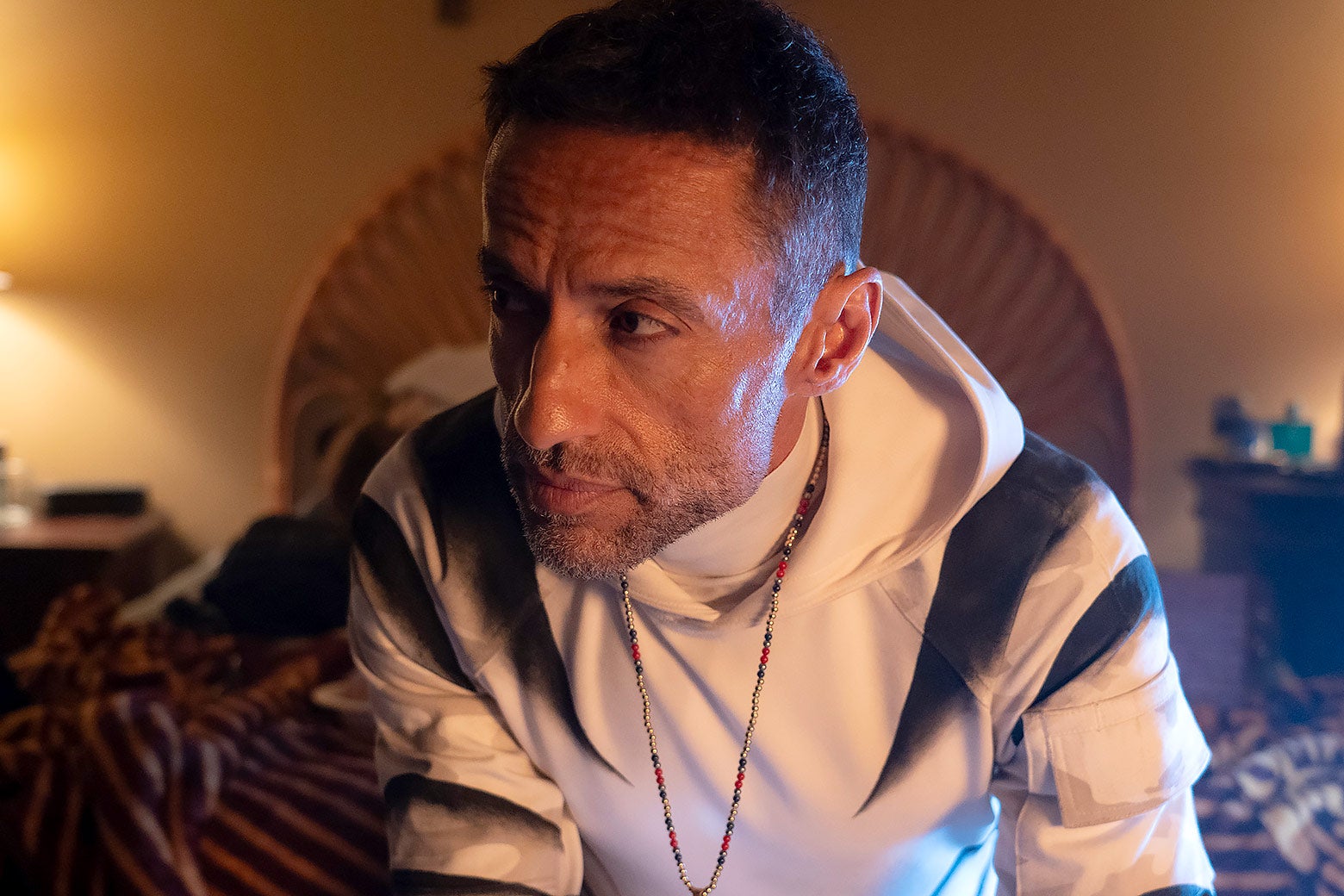
It starts like any case-of-the-week show would. In “Optics,” Ayala (Kamar de los Reyes) is Murdock’s latest client, a man wrongfully accused of killing a cop. This immediately takes Born Again into the sort of topical territory the MCU tends to avoid. That in itself is novel, but of course, novel doesn’t necessarily mean good—good is when the episode reveals that Ayala, unbeknownst to Murdock, is secretly the vigilante known as White Tiger. What begins as a story about police brutality takes on a personal dimension, putting the screws to Murdock’s decision to quit being Daredevil when a broken justice system ensnares men like Ayala and empowers rogue cops to abuse them.
Across two episodes, the second of which aired Tuesday night, Ayala’s case lays out the thematic ground of Born Again in miniature: the failure of institutions and the ways people are compelled to compensate for them, and the ripple effect that superheroes and their iconography can have on such a rotting system. Ayala, as the White Tiger, is positioned as the positive end of that spectrum: a man who does what he does simply because people need help and it’s the right thing to do. At the other end lies another vigilante, Frank Castle, aka the Punisher, who looms over the show in absentia (for now) as a symbol adopted by lawless cops, wearing his signature skull on vests and tattoos, even putting it on bullet casings.
Suspended between these two is Murdock’s past as Daredevil, which continues to cause him moral anguish. Did he put on the costume because it was the right thing to do, like Ayala? Or, like Castle, did he just enjoy the violence and its immediate results? And between those two poles, which of them is tempting him to let the devil out once more?
In addition to being vintage comic-book angst—some of the genre’s best material stems from heroes torn between their masked and unmasked personas, à la Spider-Man 2—the White Tiger two-parter smartly arranges all of Born Again’s pieces around Murdock in a way that is palpably suffocating. Murdock still won’t put on the costume, but he does act out: doing some extracurricular ass-kicking; pissing off his colleagues, who realize that the case is getting to him; and, as a result, deploying a reckless, ill-advised gambit in the courtroom in a last-ditch effort to win the trial. It’s good television. He pulls it off. Ayala is acquitted.
Despite all this, Ayala doesn’t get much screen time; the actor Kamar de los Reyes died of cancer in December 2023, after filming his parts. But the portrayal, brief as it may be, succinctly presents a moving sketch of a principled man who felt a sense of obligation to his community, one that he sometimes struggled to square with his personal life. In a quiet moment with Murdock, he tells the lawyer of one of the things that brings him peace: the memory of a small beach near his hometown in Puerto Rico, and the sound of the coquís, the small frogs native to the island, whistling out against the surf.
Ayala’s story works well in part because it is a direct adaptation of a comic-book two-parter by Brian Michael Bendis and Manuel Gutierrez, which gives Born Again a narrative spine around which to build these two episodes. While the specifics are different this time around, both stories end in tragedy. Set free after the acquittal, Ayala immediately resumes his work as White Tiger—but now that he’s been outed, one of the Punisher-loving cops is waiting for him. He’s ambushed and killed, his murderer obscured in shadow, but the Punisher’s skull is visible on his chest.
One of the failings of the modern era of superhero storytelling is a lack of reflexivity, an incuriosity about what any of these theatrics might mean—a strange omission for stories about characters known for wearing symbols on their chests. With Hector Ayala’s trial, Daredevil: Born Again reconfigures the pieces from Marvel’s Netflix era of TV shows in such a way that those symbols, and what they mean, are the central thrust of the show’s plot, building a moving melodrama about the humans behind them whose actions give those symbols meaning or turn them noxious. Then, in a quiet and gutting move, the episode gives the viewer the space to contemplate that as the credits roll: not with a fitting song or Born Again’s moody theme but with the music of coquís, singing as the waves crash along the beach.