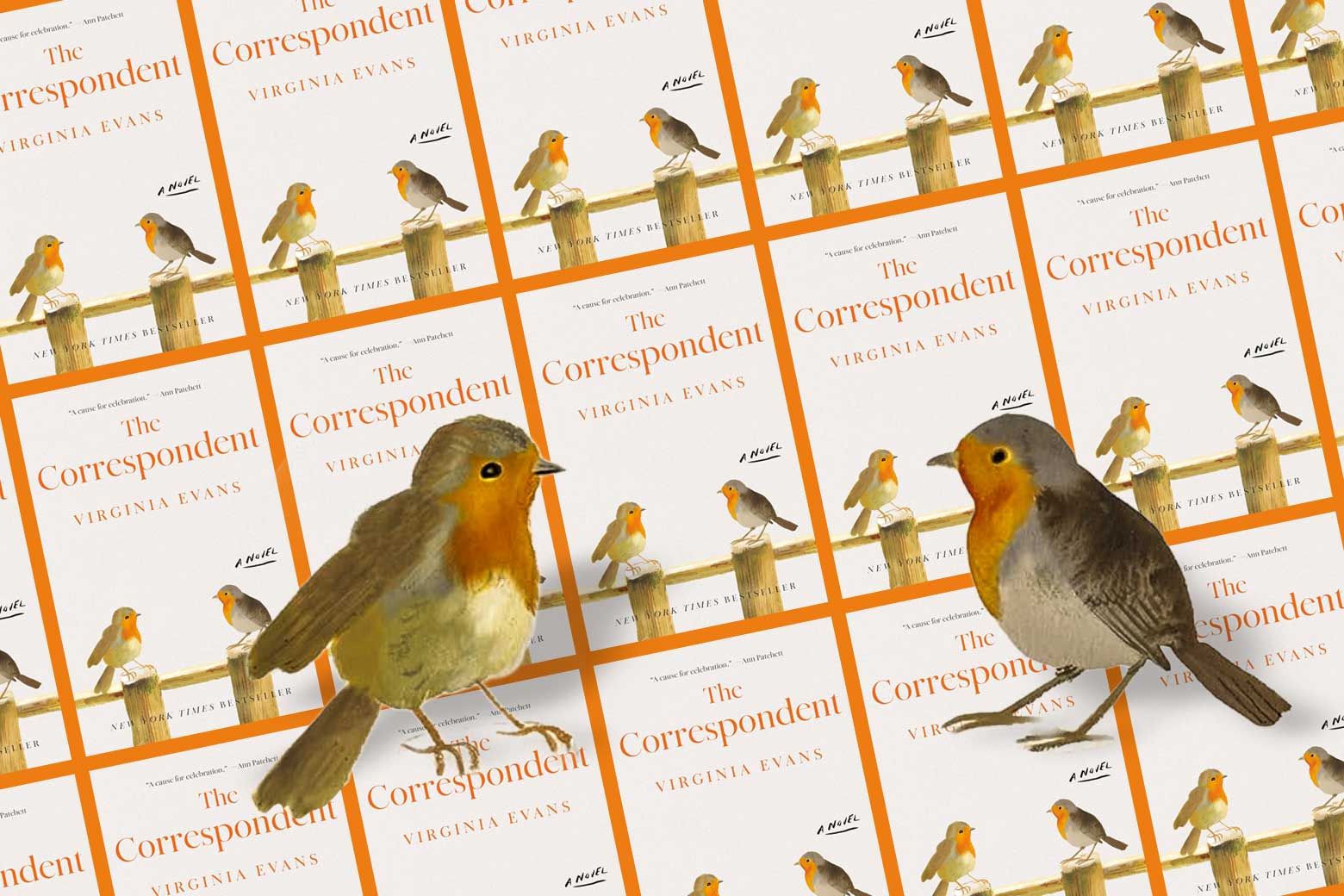
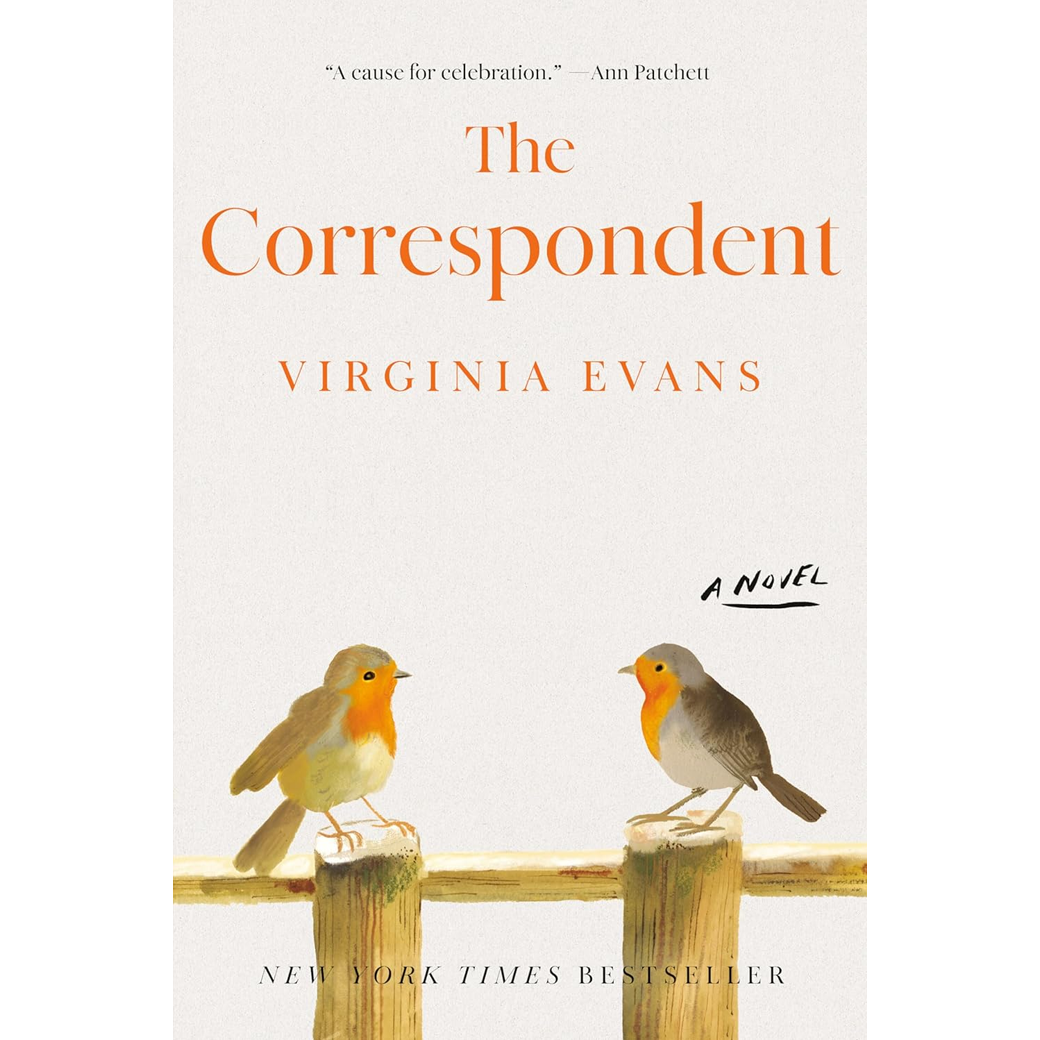
One of the biggest literary hits of 2025 seemingly came out of nowhere. The Correspondent, the debut book of Virginia Evans, an unpublished author who had previously written seven unsold novels, was published in April, but it wasn’t until December that it made it to the top of the New York Times bestseller list for hardcover fiction. (After 13 weeks on the list, it now sits at No. 3.) The novel’s slowly building dominance—“one of the publishing industry’s heartwarming champions of 2025,” the New York Times called it—is the stuff of fairy tales, dangerously encouraging for every other unpublished author out there.
But what is it about The Correspondent that has given it such selling power? “Even to its biggest boosters, the book’s ongoing success is something of a mystery,” the Times wrote in December. “There wasn’t one thing that has propelled this,” said Amy Einhorn, who acquired the novel for Crown, to the Times reporters asking how The Correspondent broke through. One of the many contributing factors could be Ann Patchett, the beloved author best known for Bel Canto and other acclaimed fiction titles. Evans used to write letters to the novelist, who blurbed The Correspondent and hyped the book on PBS News Hour last year. This partial origin story—correspondence helped launch The Correspondent!—adds to the intrigue around the book’s success.
In that PBS appearance, Patchett said she initially doubted the book’s staying power because epistolary novels—novels written in the form of letters or other kinds of correspondence—“usually don’t work.” And yet something about The Correspondent did work, enough to turn it into a quiet sensation with surprising staying power. After reading the book, I get it now. The Correspondent is an epistolary novel par excellence, a tale told in letters that is staunchly, defiantly old-school, in form and message. Its main character—Sybil Van Antwerp, a septuagenarian divorcée, mother of two living children, and former attorney living in Maryland—writes a few emails, when she must. But she much prefers sitting down with pen and paper. The book is mostly written in Sybil’s voice, interspersed with some letters she receives, and a few memorable emailed exchanges, which are often testier than the rest of her correspondence. (As Sybil says, “I often find myself behaving with less civility over email.”) Sybil is an intelligent, prickly, ultimately honorable person, and the concentrated Sybil-ness of the letters is the selling point of The Correspondent.
It might be true that readers find epistolary novels off-putting. (Anecdotally, I know a few readers who do.) But something about our particular moment calls forth nostalgia for pen-and-paper communication. This is an epistolary novel for the social media era, appealing to the hearts of readers who feel like they were born just a little too late, and are now condemned to operate in a world where interpersonal communication is so omnipresent as to have lost its glamour.
Slate receives a commission when you purchase items using the links on this page. Thank you for your support.
Sybil explains to a few of her correspondents why she has dedicated herself to the letter-writing habit, and she’s so eloquent about it, you detect waves of wistfulness rolling forth from Evans’ keyboard. To one skeptical correspondent, Sybil makes the case that letters are immortality. All the “commentary” people exchange in person or over the phone, the “prattle” sent over email, will fall away, she writes. Letters, on the other hand, will persist. Sybil invites this correspondent to imagine that the letters you send and receive back are “like the pieces of a magnificent puzzle, or, a better metaphor, if dated, the links of a long chain.” Whether or not anyone will ever reread them is not the point: “Even if they remain for the rest of time dispersed across the earth like the fragile blown seeds of a dying dandelion, isn’t there something wonderful in that, to think that a story of one’s life is preserved in some way?” This is a beautiful and melancholy idea, and you see, as Sybil’s history unfolds through her letters, that she has good personal reasons to be fixated on preservation and immortality.
In another letter, Sybil tells one of her many correspondents about her letter-writing habit—six hours a week, Monday, Wednesday, and Friday, with a glass of water or cup of tea, Tchaikovsky or Stravinsky CDs in the player “if I’m feeling passionate,” using letter-writing paper from England and only the “classic stars and stripes” stamps. (“I never buy seasonal stamps … because there is a certain structure, an ORDER, that needs to be obeyed,” she explains. How very Sybil of her!) This is a lovely vision, made all the more appealing by the fact that you know Sybil Van Antwerp, who exudes dignity and style, would never describe this routine in an Instagram reel, flogging her life for your engagement.
Sybil is a lifelong reader, who writes to authors including Joan Didion, Larry McMurtry, Kazuo Ishiguro, Diana Gabaldon, and, yes, Ann Patchett. (The letter to Gabaldon, praising Outlander, describes an uncannily familiar Outlander reading experience: “I read all day, skipped garden club, read into the night, woke in the morning, and read all the next morning, finished the book the weight of a doorstop that night and stepped onto my back porch like an opossum blinking blearily.”) In the case of Didion and McMurtry, Evans ventriloquizes each author, writing their imagined replies to Van Antwerp, drawing out connections between these beloved older authors and Sybil, who is their contemporary. It follows that people who habitually read novels will see something of themselves in this person, and readers of The Correspondent reviewing the book on Goodreads sometimes mention writing down Sybil’s reading list to add to their own “TBR” collections.
In a letter to Patchett, about her novel State of Wonder, Sybil writes of her recognition of the emotions felt by the 73-year-old character, Dr. Annick Swenson: “That amazement one feels at this stage of life—a sort of astonishment that is also confusion, which leads to a sort of worry, or a sort of fear, I guess. How did we get here? How can it be?” The Correspondent is a book about what it feels like to be aging—but, more importantly for its success, it’s also full of plot and action. So much happens to Sybil in the scant nine years of letters collected in The Correspondent! The ascendency of Donald Trump prompts her to change her party allegiance. She becomes close with the intelligent, misfit teenage son of a friend. She tracks down a stalker who is angry at her because of a choice she made years before. She befriends a Syrian refugee customer-service representative and the dean of a university college. (Sybil is always befriending.) Her ex-husband dies, with personal baggage between them unresolved. She works through an estrangement with her daughter. She has not one but two serious suitors; one tells her, in letter form, his own very dramatic story of his childhood escape from Germany during the Third Reich. Sybil figures out who her biological mother was, connects with long-lost siblings, and travels overseas.
It’s oddly reassuring to read about an older person whose life is so persistently full of incident and surprise. Sybil is wise (with some exceptions), and she is the kind of funny elder who will write a condolence letter after a funeral and enclose a voucher for 25 percent off at Applebee’s—but, very much to its credit, this novel is not “cute,” or a hokey book of aphorisms. It’s a story with a plot. All of this is anchored down—sometimes weighed down—by a tragedy at the heart of The Correspondent, which involves the early death of a child. Some of the pages of the book are unsent letters to an important recipient whose identity we don’t learn until later. Parents and the emotionally vulnerable, beware: The Correspondent should be approached with as much caution as Maggie O’Farrell’s Hamnet.
“I do wonder if, by conducting the most intimate relationships of my life in correspondence, I have kept, since I was a child, a distance between myself and others,” Sybil writes to her daughter near the end of the book, finally acknowledging that she may be responsible for their estrangement. The Correspondent is a story about the last decade of a person’s life in which they understand themselves better, let go of the past, reconcile with family, and fall in love again. American readers all too familiar with powerful, recalcitrant elders could be forgiven for enjoying the fantasy.